
What Factors Affect the Oil Yield of Palm Kernels in the Palm Kernel Oil Production Process?
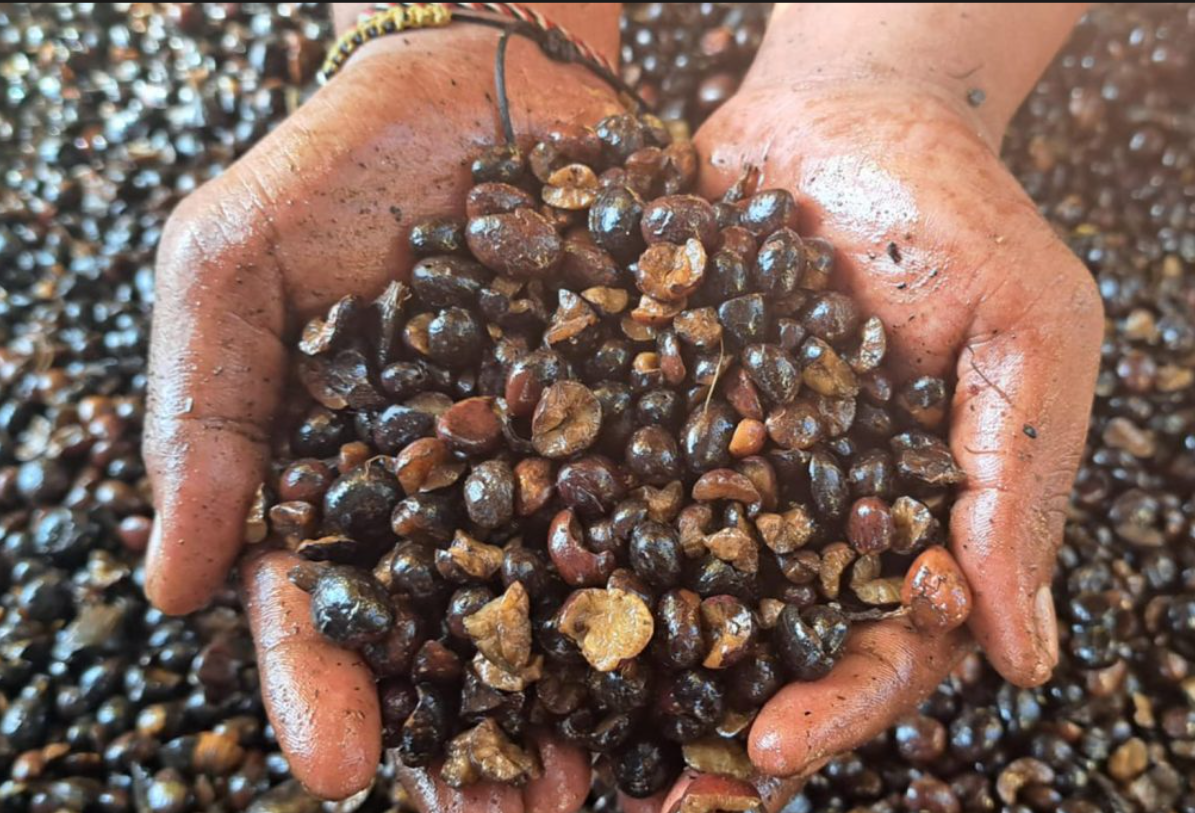
In the industrial production of palm kernel oil, the oil yield is a core indicator for evaluating the level of production technology, controlling production costs, and enhancing production efficiency. The oil extraction efficiency of palm kernels is jointly influenced by multiple factors, including raw material quality, pretreatment processes, sorting procedures, pressing equipment, and production line maintenance. Inadequate control at any stage can lead to oil loss and reduce the final oil yield. Based on the complete production process of palm kernel oil, this article systematically summarizes the core influencing factors to provide practical references for industry practitioners to improve both quality and efficiency. The quality of palm kernels is the foundation of oil yield, directly determining the upper limit of oil production. Raw material quality primarily depends on the variety, maturity, fruit morphology, and freshness. Different oil palm varieties have inherent differences in kernel oil content; specialized oil-bearing varieties have higher oil content and significantly greater extraction potential than common varieties. In terms of fruit condition, plump and well-developed palm kernels have sufficient oil content, whereas shriveled or undersized kernels contain more impurities. Immature kernels have not fully synthesized their oils and have high levels of gums and sugars; only highly mature fruits can guarantee high oil content. Furthermore, the longer palm kernels are stored, the higher the oil loss. Therefore, using fresh, high-quality raw materials is essential to maintaining a solid baseline oil yield. The purity of kernel-shell separation is a crucial guarantee for improving effective oil yield. Palm shells contain no oil. If the separation of kernels, shells, and impurities is incomplete, shell materials, mud, and rotten debris will mix into the raw material. This not only dilutes the overall oil content but also occupies space in the pressing equipment, leading to inadequate pressing and higher residual oil rates. In industrial production, the separation effect can be optimized through the coordinated use of multiple pieces of equipment. This involves first using a grading screen for particle size selection, then using a crusher to break open the shelled fruits, and finally utilizing an air separation system and a mud/silt separator to remove the shells, thereby maximizing palm kernel purity and effectively boosting the oil yield. The pretreatment process of palm kernels is also a critical factor affecting oil yield, mainly involving steaming/roasting and moisture adjustment. The purpose of steaming/roasting is to denature and coagulate proteins in the palm kernels and disrupt the cellular structure. If the temperature is too low or the duration is too short, protein denaturation will be incomplete, resulting in poor plasticity of the material flakes and a tendency for the pressed cake to fall apart. Conversely, excessively high temperatures or prolonged processing times can lead to oil oxidation, darkened color, and even a burnt odor, degrading oil quality. During the steaming/roasting process, water addition must be precisely controlled so that the material flakes reach the optimal moisture content for pressing upon exiting the cooker (typically between 3% and 5%, depending on the equipment). Appropriate moisture acts as a lubricant, reducing pressing resistance and increasing oil yield. Equipment performance and production line calibration determine the stability and upper limit of the oil yield. The pressing machine is the core equipment for oil extraction; high-performance, high-pressure professional presses can thoroughly break down the kernel tissue, completely extract the internal oil, and minimize residual oil in the pressed cake. Meanwhile, parameter matching and precise calibration across the entire production line are equally vital. Parameters such as equipment speed, feed rate, pressing clearance, and air pressure must be uniformly matched. If the production line calibration is unbalanced, issues such as uneven feeding, process fluctuations, and unstable equipment operation will arise. This causes hidden oil losses at various stages, resulting in unstable and generally lower overall oil yields. In summary, the oil yield of palm kernels runs through the entire production process, including raw material handling, pretreatment, sorting, pressing, and production line maintenance. Raw material quality lays the foundation, pretreatment processes control the core extraction phase, kernel-shell sorting eliminates production interferences, and equipment and production line management ensure extraction stability. In actual production, it is necessary to comprehensively control all key processes, strictly manage raw material quality, optimize process parameters, and standardize equipment maintenance to minimize oil loss to the greatest extent, thereby maximizing both the palm kernel oil yield and overall production efficiency..