
Structural Principles and Key Purchasing Considerations for Palm Kernel Oil Expeller Machines
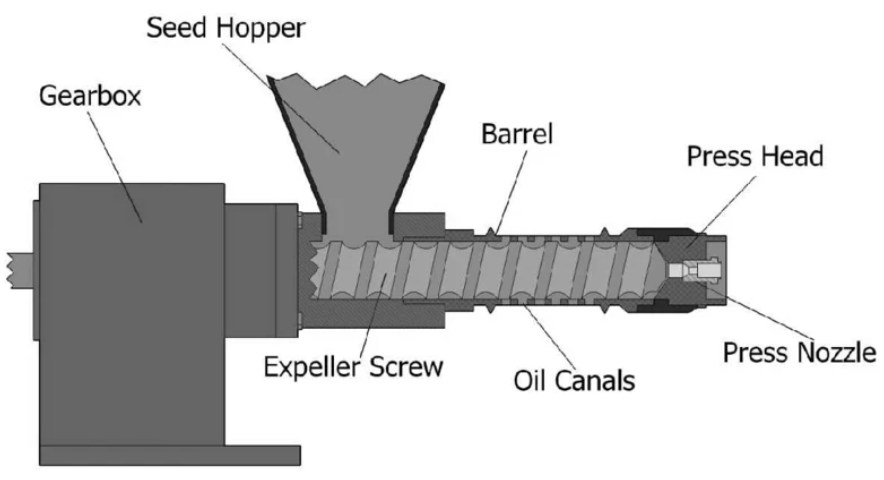
The palm kernel oil expeller machine is the core specialized equipment for palm kernel oil processing. It extracts oil through purely physical mechanical pressing and is widely used in small and medium-sized oil processing plants as well as agricultural and sideline product processing enterprises. Unlike general-purpose oil expellers, this equipment has been specifically optimized to handle the unique material characteristics of palm kernels, which are highly rigid, have tightly encapsulated oil, and are difficult to extract. Mastering its structural features and working principles helps industry professionals understand the standardized pressing process of palm kernel oil, accurately assess equipment performance, and provides technical support for equipment procurement, production debugging, and daily maintenance, ultimately improving both production efficiency and the quality of the final product.
1. Structural Features of Palm Kernel Oil Expeller Machines
A standard palm kernel oil expeller machine consists of four core modules: a support frame, a feed hopper, a pressing chamber, and a power transmission system. These components work in synergy to ensure continuous and stable operation over extended periods. The overall structure is tailored to the high hardness, high fiber content, and difficult oil extraction characteristics of palm kernels, balancing wear resistance with operational stability, and is fully suited for large-scale, routine palm kernel oil production. The support frame serves as the foundational load-bearing structure of the equipment. Welded from thickened steel, it offers superior stability, high load-bearing capacity, and excellent shock resistance. During high-speed operation and high-pressure pressing, it effectively buffers mechanical vibrations, preventing issues such as equipment displacement and component loosening. This ensures stable overall operation and provides precise mounting support for all components. The feeding mechanism centers around the feed hopper, featuring a simple yet highly practical structure. The hopper is designed with a large-diameter, anti-clogging configuration to meet the demands of continuous feeding. It can be equipped with an adjustment device to precisely control the feed rate, effectively preventing chamber blockages caused by overfeeding or capacity waste caused by underfeeding, thereby ensuring an even flow of material into the pressing chamber. The pressing chamber is the core working component of the palm kernel oil expeller, directly determining the oil yield and pressing quality. It primarily consists of two key parts: the press cage (barrel) and the press screw (worm shaft). Compared to conventional oilseeds like peanuts and rapeseed, palm kernels are significantly harder. Therefore, the press cage and screw are integrally cast from high-wear-resistant alloys, offering high strength, extrusion resistance, and dimensional stability. This design accommodates long-term, high-load pressing operations while reducing the wear on core components and lowering equipment maintenance costs. The press screw features a proprietary variable-pitch optimized structure, where the spiral spacing gradually decreases from the feed end to the discharge end. This is the core design enabling efficient oil extraction from palm kernels. As the material enters the press cage, it is pushed forward by the rotating screw. The pressing space progressively shrinks, causing the extrusion pressure to continuously increase, which thoroughly extracts the internal oil and effectively reduces the residual oil content in the pressed cake. Additionally, the surface of the screw undergoes fine finishing treatment to prevent material sticking and equipment jamming, ensuring a smooth and stable oil discharge and residue expulsion process. The power transmission system comprises the motor, gearbox, and drive belts, providing stable and robust torque for the machine’s operation. It ensures the press screw rotates at a constant and smooth speed with steady pressing pressure, eliminating malfunctions such as insufficient pressing or equipment jamming caused by inadequate power. This system can accommodate palm kernel pressing production needs of varying scales.
2. Working Principles and Complete Pressing Process Flow
The palm kernel oil expeller machine operates on the principle of purely physical mechanical pressing. Without chemical additives or high-temperature degradation, it maximizes the retention of the natural nutrients and pure flavor of palm kernel oil. The pressing process is green, safe, and streamlined, making it suitable for standardized commercial production. The entire pressing process is divided into five stages: raw material pretreatment, feeding and conveying, high-pressure extraction, oil-residue separation, and residue discharge. Pretreated palm kernels enter the sealed press cage at a constant rate via the feed hopper. Driven by the power system, the press screw continuously rotates, pushing and aligning the material to distribute it evenly within the gaps of the press cage. Relying on the structural advantages of the variable-pitch screw, as the material moves forward, the effective pressing space continuously shrinks. The material is subjected to intense friction, extrusion, and kneading between the screw and the cage, causing the internal pressure to rise in a stepped manner. Under this high pressure, the cellular structure of the palm kernels is completely ruptured, and the encapsulated oil is fully extracted and coalesces into a liquid. Once extracted, the oil flows along the drainage grooves on the inner wall of the press cage and is discharged after simple filtration, yielding crude palm kernel oil, which can be further refined into edible oil. The solid residue left after oil extraction, known as the pressed cake, is continuously pushed out from the discharge port at the tail end. This cake can be repurposed as a raw material for animal feed or fertilizer, achieving resource recovery and reducing production losses.
3. Key Purchasing Considerations for Palm Kernel Oil Expeller Machines
Based on the equipment’s structure and working principles, users purchasing a palm kernel oil expeller machine must combine their specific material characteristics and production scale to focus on material craftsmanship, pressing performance, capacity matching, and maintenance convenience. This helps avoid common purchasing pitfalls such as low oil yield, frequent breakdowns, and capacity mismatches. First, verify the material of core components. The press cage and press screw are core wearing parts and must be made of high-wear-resistant alloys. The use of low-hardness materials like ordinary cast iron is strictly prohibited. Second, focus on pressing performance and oil extraction results. Prioritize equipment with a variable-pitch gradient pressure-increasing design, and pay special attention to the residual oil rate parameters for palm kernel pressing. Third, match your own capacity requirements. Select the appropriate equipment model based on production scale. Small-scale workshops can opt for small to medium-sized models, while large processing plants should pair with high-capacity continuous pressing equipment to ensure that equipment efficiency aligns with production rhythms. Fourth, consider equipment stability and maintenance convenience. Prefer equipment with a sturdy frame, smooth transmission, and a low tendency to jam or clog. Additionally, pay attention to the ease of disassembly, cleaning, and repair.
4. Conclusion
The specialized structural design of the palm kernel oil expeller machine is the key to accommodating efficient palm kernel pressing production. The combination of a variable-pitch pressure-increasing structure and high-wear-resistant core components effectively resolves the industry pain points of difficult oil extraction and severe equipment wear. Relying on the principle of pure physical high-pressure extrusion, the equipment efficiently, safely, and optimally extracts palm kernel oil. The entire process flow is streamlined, highly efficient, energy-saving, and environmentally friendly, making it suitable for various production scenarios. In equipment selection and actual production, accurately grasping the structural advantages, core working principles, and key purchasing considerations can effectively enhance the quality and output of palm kernel oil, contributing to the standardized and efficient development of the oil processing industry.